Truelove and Shell live together in The Cross, a bohemian enclave near the centre of a sprawling city at the heart of a vast and unstable empire. They spend their days in the sun, strolling through the slip-down streets and rambling gardens; they spend their nights out on the town, in the company of the artists, musicians, and the assorted flâneurs and gadabouts who haunt the cafés and cabarets of the Cross. They sleep together, talk together, laugh together, dance together. Music, poetry, art, and the sensual life of the body and the mind are theirs for the taking. Two lovers in love, and the city at their feet. It seems an ideal life.
But is it theirs?
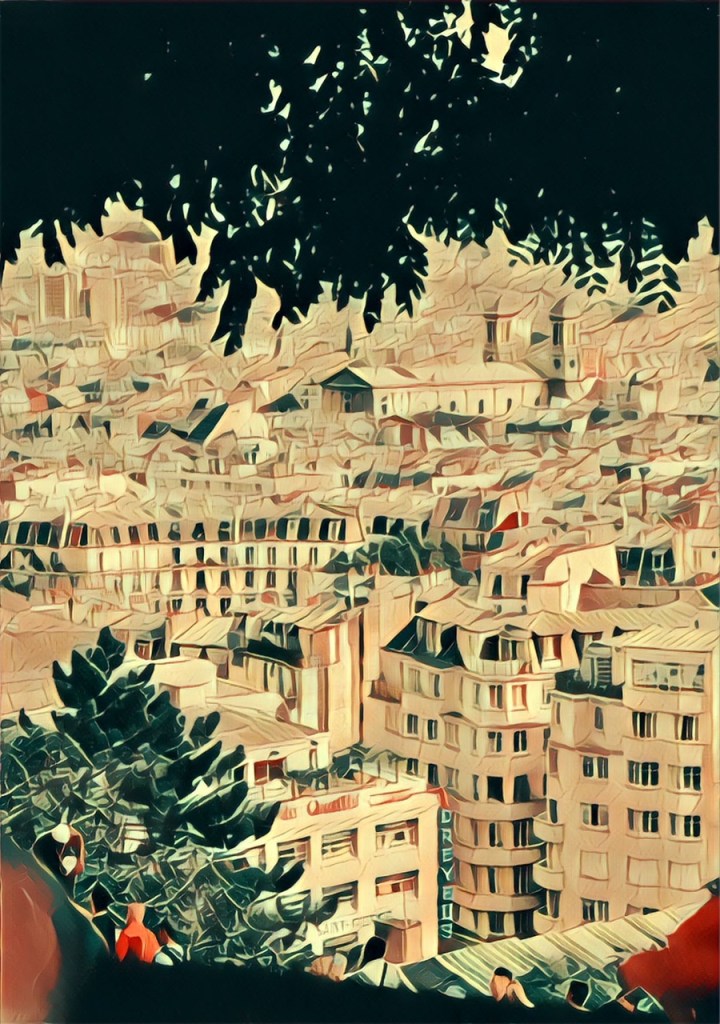
A nagging sense of unease begins to creep into their otherwise carefree days and nights, a feeling that perhaps the true nature of their existence is somehow concealed from them, hidden in plain sight. What is the nature of our reality anyway? Are we the authors of our own lives? And if so, doesn’t that mean that everything is just some kind of fiction…?
The Lost Place examines how we might seek meaning in our lives through our relationship with another, and the ensuing tension between free will, fate, and fantasy. Told in an allusive, lyrical style, the book presents the puzzle of life and love in a series of short figments littered with allusions, call-backs, red herrings, and surreal episodes. The Lost Place is set in a melange of times and places drawn from images and impressions of urban bohemia, from 1880s London to Berlin in the 1970s, via Weimar Germany, Dada Zurich, occupied France, 1950s NYC, and Paris 1968. There are sci-fi visions of the future, and lapses into a kaleidoscope of never-happened pasts.
The Lost Place is a surrealist puzzle, a meditation on the nature of our lives and loves, and, above all, a romance, in the most profound sense of the word.
 The Lost Place